A Beginner's Guide

Painting with wool,
one wisp at a time

Everything you need to know before you pick up a felting needle for the first time.

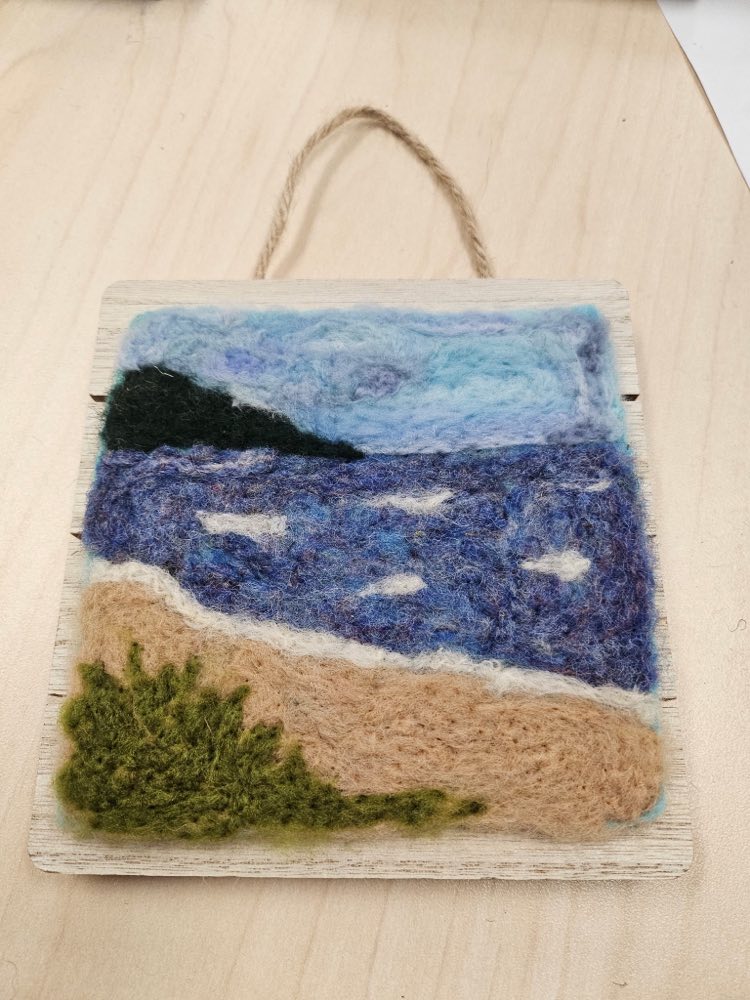
A needle felted coastal scene mounted on pale wood: a dark green headland above deep blue water flecked with white, a pale sand beach, and a mossy green shrub in the foreground.

Using a needle to
paint with wool

A felting needle has tiny barbs along its length. Every time you push it into wool, those barbs tangle the fibres together a little more. Do it enough times and loose wool becomes solid fabric.

In practice it works like painting. You draw a picture on a piece of felt, then colour it in with wool.

The part beginners get wrong is quantity. You don't take a big blob of wool and push it in. You take little wisps at a time, and build the colour up slowly.

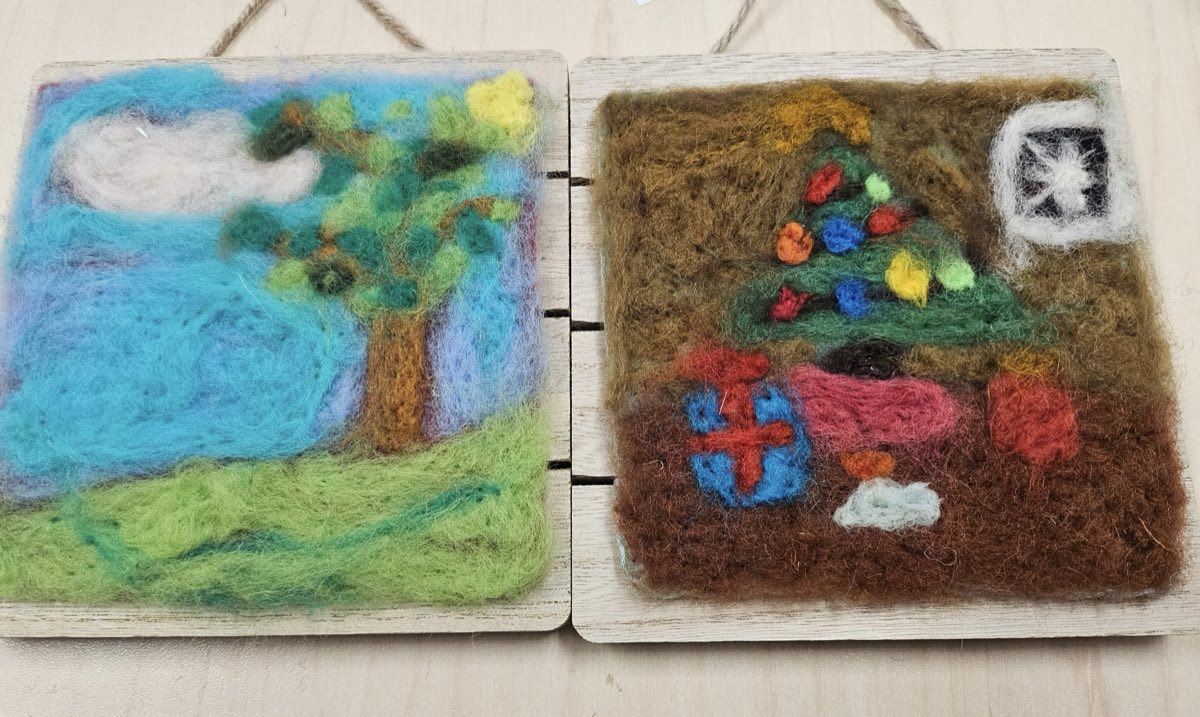
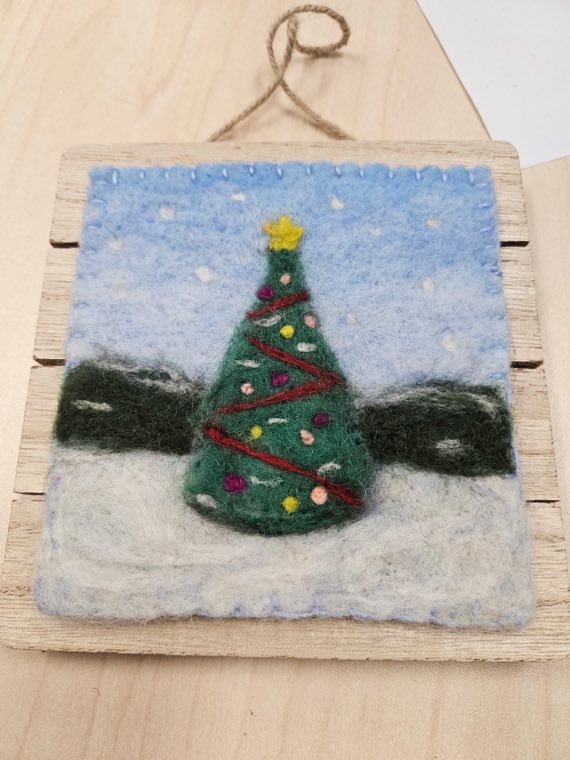
Two needle felted panels side by side: a spring scene with a leafy tree over green grass, and a winter scene with a decorated tree and wrapped presents on brown ground.

Flat to begin with,
sculptural later

Flat, or two-dimensional, is a picture worked onto a piece of felt. It's the easier of the two, and there's far less chance of catching your finger with the needle. This is where to start.

Sculptural, or three-dimensional, means building the shape itself out of wool and then felting onto it. Gnomes, animals, anything your imagination reaches for. Some people do teach it to beginners, but Liz would point you at flat work first.

Once you're comfortable, the range is wide. Some people work extremely intricate drawings this way.

What you actually
need to begin

Not much, and beginners tend to overbuy. Liz sells two kinds of kit, and either one will get you through your first picture.

The picture kit

A piece of felt, a foam pad to work on, one or two needles, and enough roving to complete a picture. Draw your own design and fill it in.

The starter kit

Three different sizes of needle, three handles — which are simply more comfortable to hold — and a thimble for your thumb and forefinger.

Gnome kits

Everything needed to make two gnomes, packed together. A good introduction to sculptural work once you've done a flat piece or two.

Kits aren't sold online. Send a message if you'd like one.

Choose something
simpler than you think

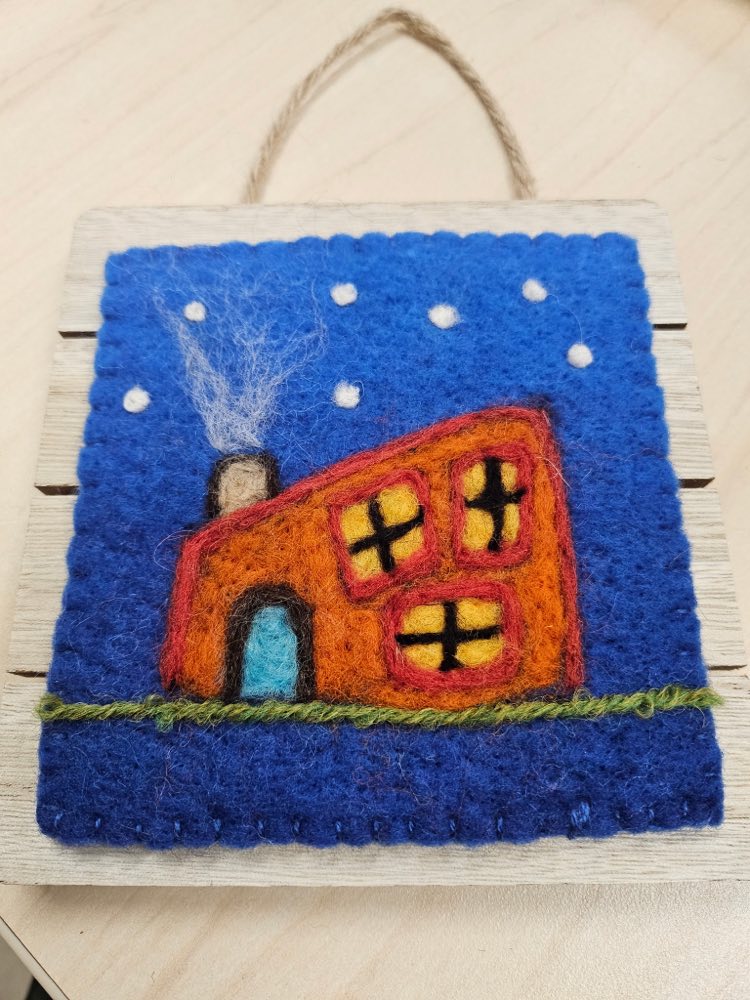
This is the decision that makes a first attempt fun instead of frustrating. Keep it simple. A flower. A house. Something with clear shapes and not much fine detail.

Intricate drawings are absolutely possible — later. For a first piece, the goal is getting the hang of the needle and the wool.

  • Where to find a picture

    Colouring books are full of exactly the right kind of drawing. Searching online for “easy pictures to draw” works well, and Pinterest is worth a look. Liz finds a lot of her own ideas the same way.

  • What to do with it once it's done

    Put it in a frame, or make it larger than the frame so it hangs over the edge. Cut it out, blanket stitch around the edge, and sew it onto a bag or mount it on a card.

  • A coaster, with one condition

    Coasters work, but only if the whole piece is the same height. If the middle of a flower stands proud of the rest, your mug won't sit flat. Keep it even.

Keep the needle
upright

Felting needles are brittle. If you push in at an angle and then lever sideways, the point snaps off. Straight in and straight out, at ninety degrees to whatever you're working on, and a needle lasts a long time.

That's the only rule that really matters. Everything else is practice — and it is, by common agreement among people who do it, extremely addictive.

"Nothing looks terrible.
It's your own masterpiece."

Liz says this often enough in workshops that it may as well be written down. People finish a first piece, look at it, and immediately start apologising for it.

She takes a photograph of every finished piece before anyone goes home. Nobody has ever regretted having it.

Come to a workshop

Sackville Heights Community Centre

Beginner needle felting

Lower Sackville, Nova Scotia

Draw a simple picture, fill it in with wool, and leave with a finished piece and notes to work from at home. Dates for the next session will be added here once confirmed.

September 11–12, 2026

Wool Stock East

New Glasgow, Nova Scotia

Liz will be demonstrating needle felting across the weekend, showing a piece at every stage from blank felt to finished picture. Come and try the needle yourself.

Say hello

Questions about needle felting, kits, or workshop dates? Send a message on Facebook Messenger.

Message on Facebook